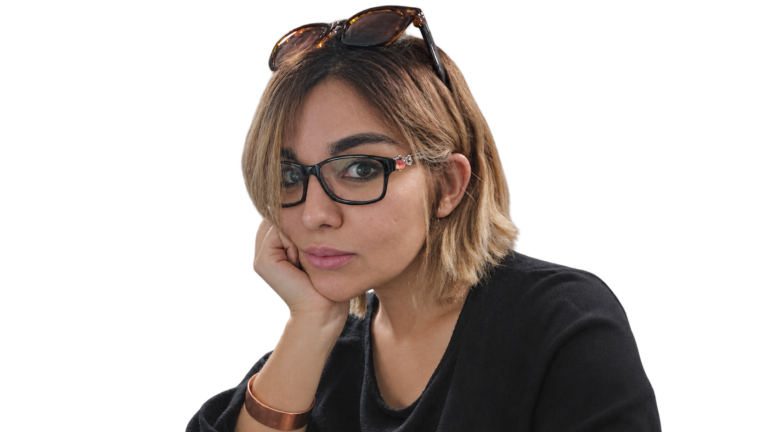
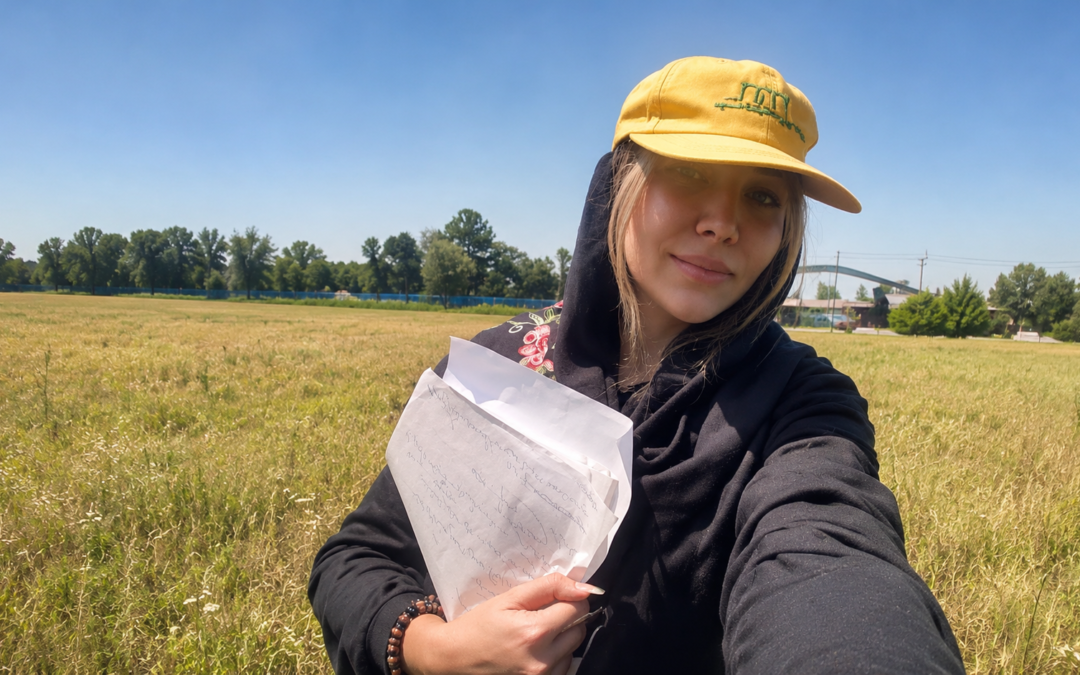
There were several holes in the right wing of the Ukrainian passenger plane. In photographs taken by a Red Crescent photographer, Maryam Shokrani noticed that, according to her, the edges of the holes were bent inward—a detail that did not fit the authorities’ initial explanation that the engine had caught fire. Journalists had not been allowed to access the crash site. Shokrani asked the photographer to show her all the pictures. She then spoke with aviation experts, victims’ families, and pilots in neighbouring countries. The newspaper refused to publish her report.
Three days later, the authorities acknowledged that the plane had been shot down. Maryam Shokrani was driving along Chamran Expressway when she heard the news on the radio. By her own account, she broke down in tears; she felt she had a responsibility towards the 176 passengers who had been killed, a responsibility she had been unable to fulfil as well as she could have.
A few years later, the case of Armita Geravand confronted her once again with the question of writing and being unable to publish. This time, Maryam Shokrani did not wait for the newspaper to publish her report. Following Armita’s death, she wrote on her X account: خود نوشت: “They wouldn’t let me write about a child of our homeland.” This short sentence spoke of a restriction she had previously experienced while investigating the Ukrainian plane, but this time the subject was the account of a teenager’s death . Armita Geravand,a teenager who fell into a coma following an incident in the Tehran metro, died 28 days later. She became the subject of an article for which Maryam Shokrani was sentenced to a fine—a ruling that was later overturned by the appeals court.
Maryam Shokrani is Head of the Economy Desk at Shargh newspaper. In her reporting, she has pursued stories ranging from photographs of the aircraft to the account books of bakeries in Dashtyari, patients living around Hamoun, and the lives of three generations of an Afghan family.
Earlier, in Dey 1401 (December 2022–January 2023), she was summoned to the Evin Prosecutor’s Office and faced the charge of “propaganda against the regime.” In Bahman 1403 (January–February 2025), Tehran’s Intelligence Organisation of the Islamic Revolutionary Guard Corps summoned her. According to a report by Defending the Free Flow of Information, during questioning she was accused of “distorting the image of the country” and threatened with punitive action. The publication of personal photographs in which she was not wearing the compulsory hijab also led to another case against her. In her interview with 1001Nomads, Maryam Shokrani says she was acquitted in that case as well.
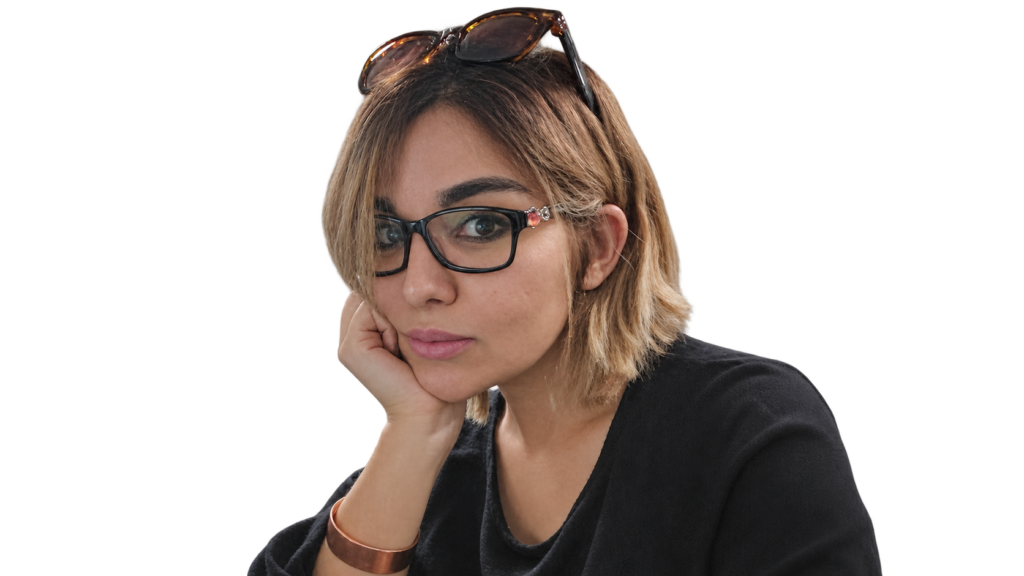
She had also faced accusations of “painting a bleak picture” following the publication of"Bread on Credit"» هم شنیده بود. The lead for the story came from a local acquaintance who told Maryam Shokrani that his cousin owned a bakery in Dashtyari, where some customers were leaving their national identity cards as collateral in order to take bread on credit. Shokrani obtained photographs of the bakery’s account book and the customers’ national ID numbers. Through a contact at the Targeted Subsidies Organisation, she matched the names to the numbers. The families had no telephones, so she tracked them down with the help of local shopkeepers’ mobile numbers, spoke with them, and then travelled to the area. According to Shokrani, follow-up inquiries with the bakers’ guild showed that the situation was not limited to a single bakery.
Following the report’s publication, several media outlets and officials denied its findings and, according to Shokrani, called for security action against her. Local journalists visited other bakeries and confirmed the existence of the practice through videos, interviews, and documentation. Similar reports also emerged from other provinces. Shokrani says these confirmations reduced the risk of her arrest.
The reactions eventually reached senior officials. The then-governor of Chabahar told Shokrani that free flour quotas would be allocated to these bakeries so they could provide bread to the families at no cost. Philanthropists also offered to help pay off the families’ debts. A factory owner proposed setting up a sewing workshop in the area, offering women training and equipment, but the project encountered administrative obstacles during the licensing process and was ultimately put on hold.
Maryam Shokrani was born on 12 January 1989 in Shiraz and is the eldest child in her family. Before she started school, her mother would cut letters of the alphabet out of cardboard and teach her to read by arranging them together. She was reading books by the age of five. She loved Isaac Asimov’s books and enjoyed testing other people’s arguments. She grew up in a household that encouraged education, employment, and independence for girls. In high school, she studied mathematics and, by her own account, was among the selected participants in the physics and mechanics section of the Khwarizmi Festival. She wanted to pursue research, but the future she envisioned for herself in Iran was far removed from her dream of working in major laboratories.
Her first published works were satire and caricatures for children. The Gol Agha magazine selected her work and gave her the opportunity to learn and publish. From Kiyumars Saberi Fumani, the magazine’s founder, she learned that satire could be a form of criticism. Her family bought and kept copies of the magazine and showed her name to their friends. According to Shokrani, she won first place in the children and young adults category at the 16th Iran Press Festival. She later earned a master’s degree in journalism from Soore University.
As opportunities to work in children’s publications became more limited and magazines closed down, Maryam Shokrani entered the world of news reporting. Working with specialist economic magazines, contributing to the economy section of Haft-e Sobh, and writing for Tejarat-e Farda led her into a field that had not been her first choice. At Shahrvand, Afshin Amirshahi, the newspaper’s editor-in-chief, entrusted her with leading the economy desk for the first time. This responsibility heightened Shokrani’s attention to the accuracy of information; she now also had to assess the quality of other journalists’ reports. She spent hours consulting experts and checking and comparing statistics. One piece of advice from her editor stayed with her: always verify information personally, even when it comes from the most reputable media outlets and sources.
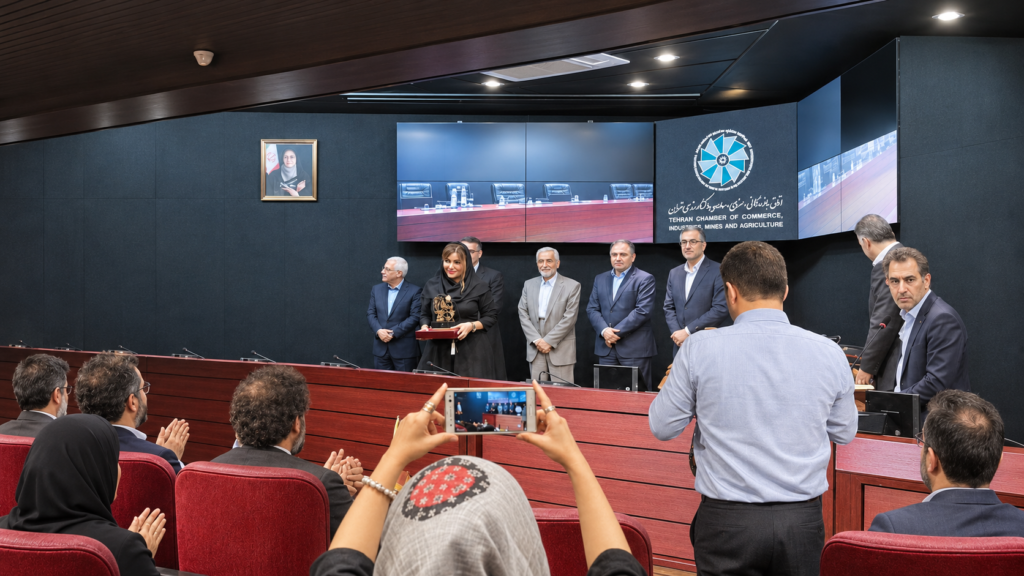
After Shahrvand, Maryam Shokrani joined Shargh, where she has led the newspaper’s Economy Desk for years. Alongside this role, she has continued reporting. She won first place in the descriptive reporting category at the sixth Amin al-Zarb Festival, while her report The Desert in the Karkheh received an honourable mention. Her author profile at Shargh Daily lists her work. at the first Best Report of the Year event organised by the Tehran Province Journalists’ Association.A Poor Piece of Landwas also nominated ۲۰۲۶ an international award for the 2026 True Story Award .
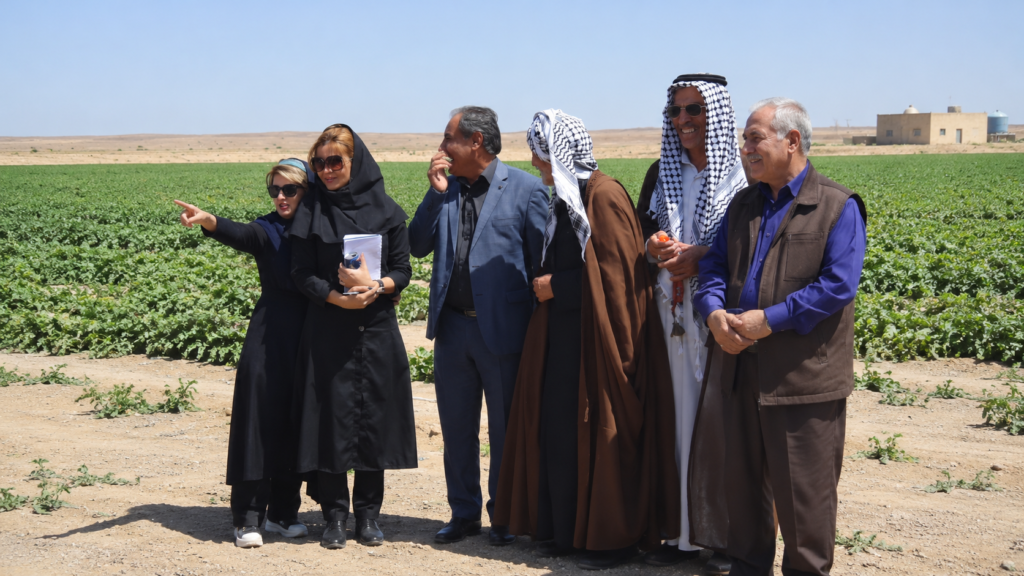
At Shahrvand, reporters were encouraged to trace the economic consequences of events in people’s everyday lives. For example, they were asked to examine how inflation affected patients who needed to buy medication. Maryam Shokrani travelled to Sistan and Baluchestan to report on the drying up of Hamoun Lake. From behind a desk, one could write about water levels, the causes of the lake’s decline, and sand and salt storms. But in the region, she encountered patients whose breathing was affected by the storms and who could not afford asthma inhalers.
Shokrani says this trip changed her approach to economic reporting. On the ground, she saw that an environmental crisis could not be reduced to water statistics and drought figures: the drying up of Hamoun had destroyed families’ livelihoods, while poverty had deprived them of the means to cope with illness. The lives of these patients revealed a dimension of the crisis that could not be seen from behind a desk or in statistical tables.
After leaving Shahrvand, Maryam Shokrani became Head of the Economy Desk at Shargh and continued her field reporting. In War’s Homebound Workers,she examined the situation of construction workers who had lost their income when building projects came to a halt and were not eligible for unemployment benefits. In The Hard Times of Rural Life,she explored the rising costs of production through the experiences of farmers and livestock breeders. In her energy-related reporting, including Europe’s Loss, Russia’s Gain,she examined shifts in oil and gas trade routes and their consequences for buyers. Censoring Pain,co-written with Zeinab Rahimi, investigated the concealment of information about genital warts in Iran.
These reports cover different subjects, but in each of them, Shokrani traces the consequences of decisions and crises in people’s lives. The Desert in the Karkhehreceived an honourable mention at the Best Report of the Year event, and Maryam Shokrani won first place in the descriptive reporting category at the sixth Amin al-Zarb Festival. Some of her work can also be found in reports published under the names of her colleagues.
Maryam Rahimi, a journalist at Donya-e Eqtesad, considers much of her professional training to be indebted to Maryam Shokrani, her first editor. She learned from her how to structure and organize reports, conduct thorough research, and verify information. She was nineteen or twenty when she worked under Shokrani’s supervision. Whenever she was dissatisfied with the outcome of an interview or report, she would take the text to Maryam Shokrani and hear her say, “Don’t worry.” Shokrani took the time to edit her work and gave her the opportunity to improve it. Rahimi says: “Every time one of my interviews or reports was published, I could see how much better it was than my previous work.”
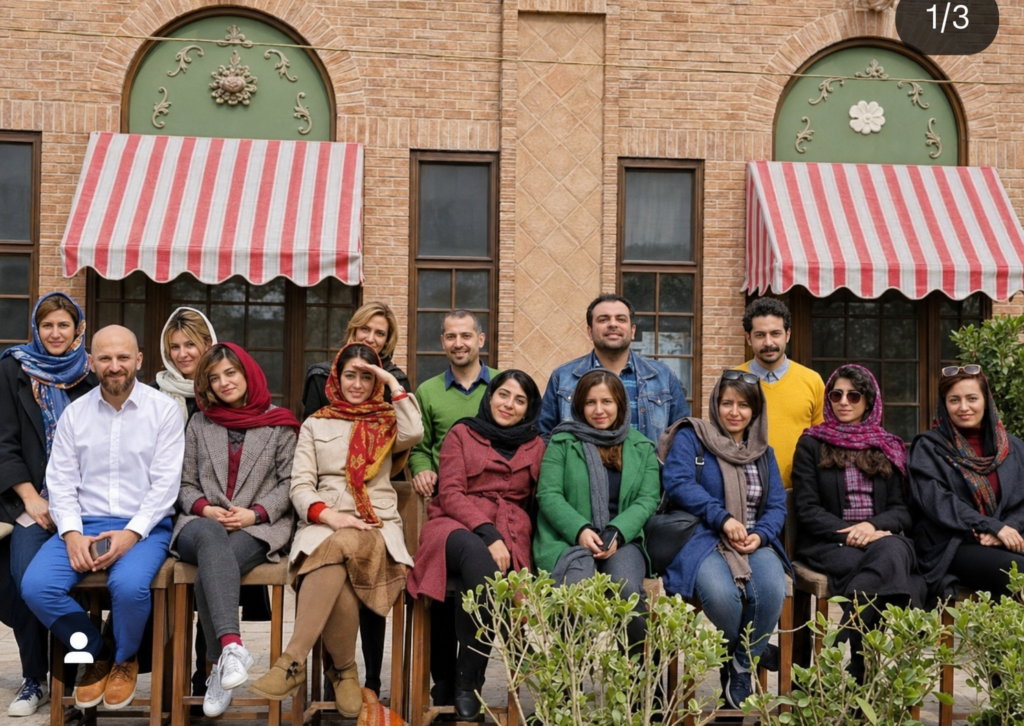
Their professional collaboration developed into a lasting relationship built on sharing experience and providing support. According to Rahimi, their conversations continued outside the newsroom, too. Invitations to cafés or restaurants and suggestions to go to the theatre were among the ways Shokrani showed consideration for her younger colleague. Years after their professional collaboration ended, Rahimi still remembers her as someone who played an important role in her professional development and stood by her through difficult times: “It’s been years since Maryam was my editor. She is my big sister now.”
Rahimi speaks of Shokrani’s enthusiasm for new story ideas: “Her eyes light up.” She also points to Shokrani’s refusal to accept a“white SIM card,a term used for mobile lines with privileged access to the internet without filtering. In Iran, these lines have been assigned to certain groups of users, including some officials and journalists, while the general public faces restrictions when accessing many websites and social media platforms. According to Rahimi, Shokrani did not want access to a privilege denied to the wider public. She saw this decision as a refusal to claim special treatment for herself. It was a practical rejection of discrimination in access to information, without, her colleague says, blaming others for making a different choice.
Shokrani says she has voluntarily trained many interns, most of them women, some of whom now work for Iranian media outlets. At the time of this interview, she has two female interns. She considers building a network of investigative journalists essential to rebuilding trust in the media.
In the past, following up on colleagues’ situations has sometimes taken her from the newsroom to the places where they were being detained. In Bahman 1402 (January–February 2024), when employees of Fardaye Eqtesad were being held at the outlet’s office, Maryam Shokrani and Zeinab Rahimi reported on their situation. Shokrani went to the location to follow up. According to her account, officers impounded her car because she was not observing compulsory hijab.
Regarding the Ukrainian passenger plane, Shokrani says the findings of her investigation did not match the official account, but the newspaper refused to publish the report. The management was concerned about the newspaper being shut down, employees losing their jobs, and potential security-related consequences. She raised some of her questions on her personal account and on Tejarat News, and says she was summoned over those posts as well. Three days after the crash, officials acknowledged that the plane had been shot down. Shokrani remembers the moment she heard the news: she was driving on Chamran Expressway in Tehran, the radio was on, and she was sobbing behind the wheel.
She felt she had a responsibility toward the 176 people killed on the flight, a responsibility she had been unable to fulfil. She says she understood the pressure of censorship on newspapers and did not blame her colleagues. But after struggling with the decision for some time, she resigned from the newspaper. She had no motivation to stay somewhere her investigation could not be published. In her article“You Are Either Crazy or in Love”in Khat-e Solh, Maryam Shokrani also wrote about the prevention of her investigation’s publication and her thoughts of leaving journalism.
She conducted another investigation at her own expense: she bought samples of packaged milk from shops and sent them to a reference food laboratory to be tested for aflatoxin. She says the aflatoxin levels in some samples exceeded the permitted limit, but the report was not allowed to be published on the grounds that it could cause public alarm. She describes how this made her feel: “Knowing a fact but not being allowed to publish it.” Writing about it on her personal account did not make that feeling go away either; new developments had already shifted public attention to other issues.
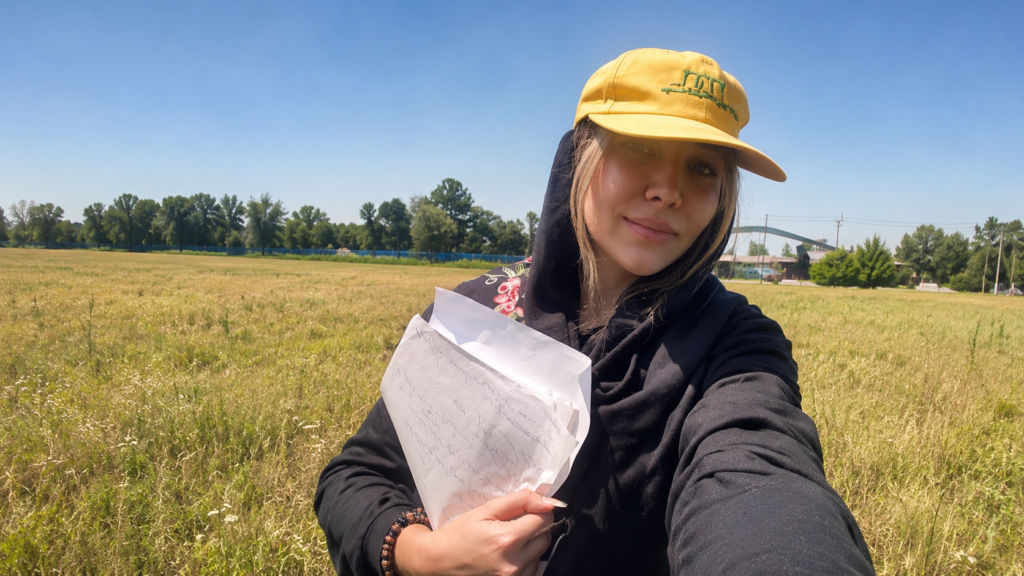
«A Poor Piece of Landbegan with an effort that was not initially intended to produce a story. From the balcony of her home, Maryam Shokrani’s mother witnessed a contractor mistreating a young boy who worked as a street cleaner. She called her daughter. They wanted to help the child; at that moment, they did not even think about taking photographs. Maryam Shokrani, together with her mother and a lawyer, followed up in an effort to find the child and arrange for him to be placed in the care of social workers. Most of the nearly one year they devoted to this effort was spent searching for him and pursuing the matter through the legal system.
While searching for Hossein, the child who had been abused, she came across his teenage co-worker and the story of his family.A Poor Piece of Landfollows three generations of an Afghan family, from working in cotton and opium poppy fields to migration and labour in Tehran. To write this history, Shokrani interviewed Afghan migrants and farmers, read historical and economic research, and consulted experts. She wanted to understand how war, poverty, and power relations had brought the family to its present circumstances.
Some workers were unwilling to have their voices recorded. Shokrani knew that speaking to a journalist could lead to their dismissal or deportation to Afghanistan. She cross-checked their memories against documents, old newspapers, and eyewitness accounts, and left out some details because her research was insufficient. She says she published the report only when she no longer considered the information in it a danger to the child and those who had shared their stories. By then, Hossein had been sent back to Afghanistan.
According to Shokrani, the contractor was acquitted in court and returned to work. Their efforts did not result in the support they had hoped to secure for the child. When the lawyer suggested writing a report, Shokrani felt compelled to reveal her own role in the events so that readers would understand how the writer had become involved in the story. She still says she was not happy about appearing in the text; the child’s fate mattered more to her than having a report published.
«A Poor Piece of Landpublished in September 2025 and placed Maryam Shokrani among the 36 nominees for the for the 2026 True Story Award She had submitted the report at the encouragement of her journalist friends. She was at home when she received the nomination news and first informed her editor. She was unable to attend the festival in Bern. She says the closure of the Swiss embassy in Iran and unsuccessful attempts to obtain a visa from neighbouring countries prevented her from travelling.
Shokrani considers this report the work closest to the kind of journalism she wants to continue pursuing: a narrative that examines the abuse of a child in relation to migration, war, and the economy. She still has no news of Hossein or his friend. She says that following the case, despite not achieving the result she had hoped for, deepened her sense of responsibility toward children and gave her a renewed motivation to write. She is now preparing reports on the impact of inequality on children’s lives.
To continue producing this kind of reporting, what she needs is time and financial security: the ability to spend several weeks or months researching without putting her own livelihood as a journalist at risk. She has experienced investigations that could not be published, assistance that failed to lead to employment, and legal action that could not keep a child out of danger. She also retains these outcomes in her narratives. In her account of the consequences of"Bread on Credit", she also describes the abandoned sewing workshop after the announcement that free flour would be provided: families needed an income, and that promise had not provided one.