
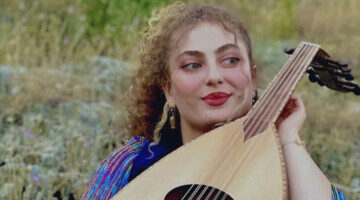
**Zhina Ahmadi, an artist and founder of the Zhilemo music centre in Marivan, remains in the quarantine wing of Sanandaj’s women’s prison eleven days after her arrest. Human rights reports say she has been denied access to a lawyer, telephone calls and family visits. The reason for her arrest and her legal status remain unclear.**
1001Nomads | 24 Mehr 1405 — 16 October 2026
In Marivan, Zhina Ahmadi’s name is associated with Zhilemo, a centre where children and teenagers learn music, painting and cinema. Its founder is now imprisoned in Sanandaj. Eleven days have passed since security forces took her from her home, yet the information published about her situation still amounts to a handful of brief reports. None indicates that she has been able to consult a lawyer. According to those accounts, she has not been allowed visits from her family either.
Ahmadi was arrested at her home in Marivan on Monday, 5 October, corresponding to 13 Mehr. Published reports say officers subsequently transferred her to Sanandaj. One account, citing an informed source, states that no judicial warrant was presented at the time of the arrest. No further information is available about which agency carried it out or what explanation the officers gave. The latest report, published on Friday, 16 October, says she remains in quarantine.
Reports identify her place of detention as the quarantine wing of Sanandaj’s women’s prison. Some refer to the central prison, while others name the city’s correctional and rehabilitation centre. They agree, however, on her continued detention and lack of access to a lawyer and family visits. A ban on telephone calls has also been reported, leaving her family unable to hear directly from her about her situation.
A brief call from a prisoner can answer a few basic questions: Is she well? Does she need medication? Does she have essential supplies? What does she know about her case? No direct answers to those questions are available concerning Ahmadi. Published accounts describe restrictions on her communication but provide no details about her health or daily conditions of detention.
The lack of access to a lawyer adds to the uncertainty. It remains unclear what allegation underlies her arrest or what judicial decision has been made to extend her detention. The publicly available information does not establish whether she has been formally informed of any charges. The reports offer no specific explanation of the case: eleven days after her arrest, it is still unclear what accusation she may have to defend herself against.
Ahmadi comes from the village of Negel and lives in Marivan. Zhilemo is both her artistic name and the name of the centre she founded. According to published information, the centre introduces children and teenagers to several disciplines, bringing music together with painting and cinema. This part of her life, beyond the brief description of an “arrested artist”, speaks of work intended for children and devoted, day by day, to teaching.
When a teacher is arrested, news reports usually record a name, an arrest date and a place of detention. A professional life is reduced to a few words, leaving little room to understand the work that preceded the arrest. In Ahmadi’s case, the available information is insufficient to give a full account of her teaching career, her methods or the process of establishing the music centre. Yet even this limited record of her work shows why understanding her life requires looking beyond the legal case.
An arts school forms part of a city’s cultural life. Children encounter instruments, images and ways of expressing their own experiences; families entrust their education to the school, and teachers build relationships through sustained work. What has happened to Zhilemo since its founder’s arrest therefore matters too, although no documented answer is yet available.
The reports reviewed do not establish whether classes are continuing or have stopped. Nor is there reliable information indicating that the centre has been closed or its activities restricted. What is known about Ahmadi should not be supplemented with assumptions about the fate of her school. None of the available information, on its own, establishes that her artistic work or her teaching of children was the reason for her arrest.