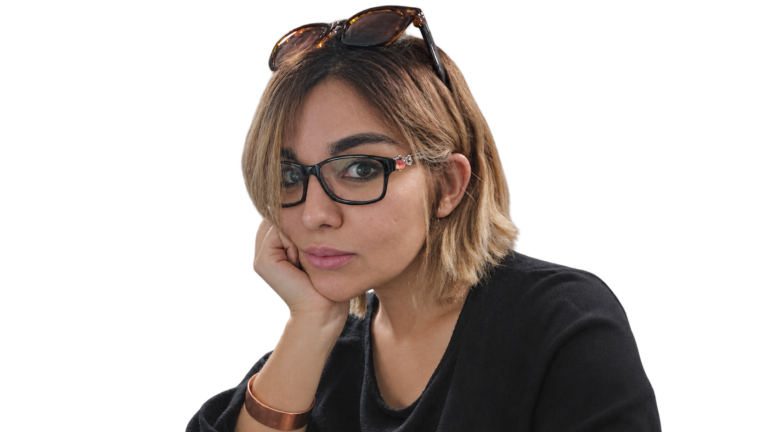

Vidah Rabani is now writing not from behind the bars of Evin, but from behind the door of a house; a door that, according to her, the police helped her husband to close behind him. Vidah is one of the signatories Statement of 17 political and civil activistsIt was against oppression and tyranny, and he paid the price of his signature with imprisonment and violence. Now, however, he is defying another silence; a silence that this time is not only being demanded in the name of «honor»; it is also being reproduced under the guise of political expediency, friendship, and concern for tarnishing the «self.» The same constant «hiss,» this time with different words.
Her new account of domestic violence is a test for the media and a society that views prison scarring as political, but reduces domestic violence to a «private matter.» Vidah Rabani speaks of a house that, according to her, was evicted a few days earlier.
His writing begins with a warning: «Domestic violence should not be silenced.»
This statement may seem simple, but in a society that expects battered women to first and foremost preserve their dignity, saying it is a form of defiance. The woman must endure the pain, wash her face, cover up her bruises, and be careful not to reveal the violence, which would undermine the man’s reputation, the family, or the political circle around him. She is asked to sacrifice herself again; this time not to save the marriage, but to save the face of the man whom she says has taken away her security.
In a post published on August 21, 2022, Vidha Rabani accused her husband, Hamidreza Amiri, of beating her, removing her from her home, seizing or selling her property, taking a loan by forging signatures, and using her time in prison to deprive her of financial rights and the right to divorce. She also wrote that another man had come to the scene to participate in the beating and that the police officer, instead of supporting her, helped her husband lock the house.
Rabani’s narrative is not limited to an Instagram post. Vidar Rabani has published her narrative along with a collection of images and videos: a close-up photo of her severely injured and bloody finger; a flyer with the heading «Command of Greater Tehran Police – Emergency Police 110» and the case number, on which blood stains are also visible; and videos in which Hamidreza Amiri, her husband, is seen entering the house. In another video, an officer from the police force is also seen locking the door at the house! This scene, which Vidar Rabani described not as interference to protect herself but as the officer helping her husband to lock the door, makes the presence of the injury and the police presence visible and lends weight to the narrative.
Accused of domestic violence against Vidha Rabani; the man who previously narrated the bruises in his prison cell
There is a contradiction in this story that cannot be easily ignored. Just a few months ago, Hamidreza Amiri’s name was mentioned in the media as the husband of Vidah Rabani, who reported on the abuse she suffered while in custody. After meeting her husband, she wrote that Vidah’s body was covered in bruises and that the officers, due to her resistance to the mandatory hijab, had pulled out her hair and cut it short. Vidah later made a wig out of those same cut hair; a small object that became a document of the great violence inflicted on women’s bodies. The image of this wig and Rabbani’s direct account of the abuse and assault in custody, in Report from The GuardianIt was also published.
Now the name of that same man appears in the narrative of the rapture of domestic violence.
This outrage should not be consumed as a story twist or personal scandal. The issue is not just that a man previously appeared as a supporter of a political prisoner and today is accused of violence against the same woman. The more important question is why part of society still believes that political position, a history of struggle, or support for a prisoner can create moral immunity for an individual’s behavior at home.
No political background, no intellectual camaraderie, and no image of freedom cannot take the place of accountability. Patriarchy is flexible: it can speak out against forced veiling, learn the language of human rights, and at the same time consider the woman’s body, property, and freedom of choice as her own. There is no contradiction; patriarchy can take up the language of freedom without giving up its privileges.
Feminism begins right from this point; from where political fame, friendship, solidarity, and the memory of other struggles do not create a safe haven for anyone.
Vidah Rabbani’s narrative is not just about physical assault. She spoke of a series of behaviors that, taken together, can create a mechanism for controlling a woman’s life: leaving the house, taking and selling property, creating debt through loans that, according to Rabbani, were obtained by forging her signature, and refusing to grant the right of custody, which, according to her, had been agreed upon before marriage.
Economic violence is not a minor detail in this narrative; one of the main tools of dispossession is debt. When a woman’s property is sold without her consent, a debt is created in her name, and the legal possibility of leaving the marriage becomes a means of pressure and extortion; control is exercised not only over the woman’s body; it also encompasses her future, independence, and the possibility of her liberation.
The prison was also, in Vidha Rabani’s narrative, not just a place with walls and bars. According to her, her period of political imprisonment became an opportunity to deprive her of her property and control. Her government forcibly separated her from society and her daily life, and according to Vidha Rabani’s narrative, the closest person in her life took advantage of this forced absence.
Thus, imprisonment can continue outside of Evin as well: in the bank account, in the property deed, in the family court, and behind the door that is closed on a woman.
The same system that mobilizes the police, prosecutors, judges, and prosecutors to cover up, silence, and write down a woman’s protest, often calls it «the conflict between husband and wife» when confronted with domestic violence. When violence is carried out by the government, it takes the name of «security intervention,» and when it occurs in the home, it is reduced to a «family matter.» In both situations, what is ignored is the woman’s safety, autonomy, and narrative.
Iran still does not have a comprehensive and enforceable law to prevent violence against women; a law that would recognize physical, psychological, sexual, and economic violence and create effective mechanisms for immediate protection, safe haven, restraining orders, and specialized intervention. A bill that was supposed to reduce such a gap was repeatedly changed after years of interaction between government agencies, and at one point even the word «violence» was replaced with ambiguous terms; a process that ultimately led to The government’s retreat from the modified version It was done.
In such a structure, the law may require obedience from a woman, but it will not guarantee her security; it may have penalties for her behavior and dress, but it will not provide a safe path for her when she is driven from her home for a moment.
The media should not retry Veda
The way this narrative is covered is itself part of the problem. The media’s first question should not be why Rabbani spoke now, why he remained silent before, why he married this man, or why he did not leave the relationship sooner. These questions remove the alleged violence from the center of the news and make the woman who spoke the subject of public scrutiny.
Potential victims of violence never speak up at the first moment. Fear, economic dependence, hope for change, family pressure, the absence of a safe home, threat, shame, and concern about friends’ judgment can prolong silence. The past silence does not automatically invalidate today’s narrative.
But the more important question is: Why is the narrative quickly politicized when the violence comes from the government, but suddenly everyone resorts to «caution,» «listening to both sides,» and «the complexity of private relationships» when the accused is the wife of a political prisoner? Why are prison bruises a testament to resistance, but the bruises at home are reduced to «family discord»?
Solidarity is easier when the accused is a stranger. When the accused is a friend, colleague, political figure, or an ever-present guest at social gatherings, solidarity becomes a test. That is where society must choose between friendship with power and standing by its principles.
The responsible media must report the narrative accurately and with attributed actions; seek the answers of the mentioned individuals; examine any possible documents; and refrain from publishing images that merely turn the female body into a commodity for viewing. The media must not again ask the woman to expose her body in public to prove suffering.
Solidarity is not just the sharing of a hashtag for political prisoners. Real solidarity is measured when the accused person is a friend, colleague, political figure, or an ever-present guest in familiar circles. That is where society must choose between friendship with power and standing by its principles.
Shame should change its place.
Vidah Rabbani ends her article by saying she is a political activist and has no shame, but has done nothing to be ashamed of. Then she redirects the shame towards those who, according to her, are welcoming the accused man with open arms. This shift in shame is perhaps the most political part of her article.
For years, shame has been put on women: shame from being beaten, shame from staying, shame from leaving, shame from divorce, shame from revealing oneself, and even shame from staying alive. Men can be violent, but women must worry about the collective reputation. This unspoken contract does not only operate within the family; it is reproduced in political circles as well. Where the «honor of the movement» or the «preservation of unity» suddenly becomes more important than a woman’s safety, inviting her to silence so that the public image is not tarnished.
Shame here is not a personal feeling, but a mechanism of power. Shame forces the woman to internalize violence, to hide it, and to blame herself. In contrast, the man and his accomplices are exempt from the burden of shame. When political colleagues, friends, and former comrades-in-arms instead pressure for silence rather than support the exposure, they are actually repeating the same logic: the collective reputation is more important than the woman’s body and the woman’s safety.
Vidha Rabani has torn up this contract. She says shame must be taken from the body of a woman who has been harmed and left to shoulder the burden of violence, silence, and complicity. This shift is not only ethical; it is political. Because it shows that even in spaces that claim to be free, patriarchy can re-construct itself with language of solidarity and caution.
Now it is not the duty of the media and enforcement activists to issue rulings; their duty is to prevent this narrative from being buried under the name of «family differences» or «private matters.» The responsible institutions must ensure the immediate safety of Robani, independently investigate any potential complaints, preserve relevant documents regarding financial and physical claims, and answer questions about the actions of the officer present at the scene. The accused individuals must also have the opportunity to present their responses.
But until those answers arrive, one principle should not be in doubt: women should not be killed first to be heard, their bodies should not be turned into a bloody exhibition, and they should not have a dossier as long as a court case to give the society at least a chance to take the danger seriously.
Veda Rabani once wrote about violence in prison and told other women that their voices were silenced behind walls. Today she speaks from home; from a place where society — and sometimes even political circles — likes to call it private so it has no responsibility to it. But domestic violence is not private. It is the unequal distribution of power; power over bodies, money, homes, reputations, and the right to leave.
Vidah Rabbani wrote: «They should be ashamed, not me.»
Perhaps the first task of feminism and journalism is precisely this: restoring shame to its true place; from woman to violence, from the whistleblower to complicity, and from the silenced to the law that arrives too late and the window closed before the eyes of the authorities. Now the task of the media and activists is not to bury this narrative under titles like «family conflict» or «private matters.».
The responsible authorities must immediately ensure the safety of Vidar Rabani, independently investigate the allegations made, preserve the documents related to the injuries and financial matters, and respond to the actions of the police officer present at the scene. The mentioned individuals must also have the opportunity to provide a response.
But beyond formal institutions, the political and media community must also decide: is camaraderie, a history of collaboration, and the public image of individuals more important, or is this simple principle that domestic violence is not a private matter? Solidarity is easier when the accused is a stranger. When the accused is a friend, colleague, or constant guest of familiar circles, solidarity becomes a real test.
Veda Rabani once wrote about violence in prison and spoke of women whose voices remained behind the walls. Today she speaks from home; from a place where society, and sometimes even political circles, like to call it private so that it has no responsibility to it. But domestic violence is not private. It is the unequal distribution of power: power over the body, money, home, reputation, and the right to leave……